لیست بیماری های قارچی گزارش شده در استان گلستان

همایون، کاظمی، محمد علی اقاجانی، علی دهقان ، عبدالرضا فروتن ، ساسان رجائی وخشنور نورالهی ، 1385. بررسی پراکنش واهیت بیماری سپتوریا سنبله گندم دراستان های مختلف کشور ص 1 .هفدهمین کنگره گیاهپزشکی ایران . stagonosyora  nedorum


شعبان کیا ، عبدالرحیم نظری ومحمد ترابی ، 1385 ، بررسی عملکرد ناشی از آلودگی به پستوریوز برگی درارقام تجاری گندم دراستان گلستان ص 4 ، هفدهمین کنگره گیاهپزشکی  ایران ، septoria tritici

آزاده بشیری ، محمد رضوی ، محمد ترابی وسعید رضایی ، 1385 ، بررسی اختلافات بیماری زایی در میان جدارهای mycosphaerella graminicola عامل بیماری لپتوریوز گندم درایران ص 8 ، هفدهمین کنگره گیاهپزشکی  ایران .

Mycosphaerella graminicola

مهدی بهدانی ، علی روستایی ، حسن رضا اعتباریان وغلام خداکرمیان .1385 ، کنترل بیولوژیک قارچ Bipolavis spicitera عامل پوسیدگی ریشه گندم توسط باکتری های آنتاگونیت Pseudomonas وBacillus ص 12 ، هفدهمین گنگره گیاهپزشکی ایران ، Bipolaris spicifera

مهسا علیمی ، محمد جواد سلیمانی ، حشمت اله رحیمیان ومحمد علی دهقان ، 1385 ، بررسی مکانیسم های بیوکنترلی  وتفاوت درمیزان بازداری چند باکتری آنتا گونیت به صورت کار بردنک  جدایه ومخلوط برقارچ Fusariam graminearum

عامل بلایت فوزاریومی خوشه گندم ص 13 ، هفدهمین کنگره گیاهپزشکی ایران . Fusarium graminearum

صفرعلی مهدیان ، 1385 ، پرآزادی جرابه های

Blumeria graminis F.sp.tritici دراستان های مازندران و گلستان ص 52

هفدهمین کنگره گیاهپزشکی ایران ، Blumeria graminis F.sp.tritici

سیدمهدی شتاب بوشهری وعبدالرضا فروتن ، 1385 ، بررسی تاثیر آلودگی زنگ زرد درمراحل مختلف رشد درارقام مختلف گندم در خوزستان ص 55 ، هفدهمین کنگره گیاهپزشکی ایران ، Puccinia  striiformis

داریوش شهریاری ، حسن یونسی ، خدیجه حافظ ، مریم خیرخوان ، منصور صلاتی ، محسن مهدیه ومجتبی اسکندری ، 1385 ، بررسی خصوصیات جدایه

Fusarium oxysporumعامل پژمردگی نخوددرمناطق عمده کشت دیم ایران ص 122

هفدهمین کنگره گیاهپزشکی ایران ، Fusarium oxysporum F.sp .ciceri

سمیه لتانی ، عبدالحسین طاهری ، زهرا تنها معافی واسماعیل رضوی ، 1385 .

بررسی اثرات متقابل نماتد مولد زخم ریشه Pratylenchus thornei و قارچ عامل پژمردگی Verticillium dahlia ص 227 ، هفدهمین کنگره گیاهپزشکی ایران ، Verticillium  dahlia

عباس محمدی وعزیزا... علیزاده ، 1385 ، گزارش نژاد 1 قارچ Phytophthora  sojae  عامل پوسیدگی ریشه وطوقه سویا از مغان ص 233 ، هفدهمین کنگره گیاهپزشکی ایران ، Phytophthora sojae  

همایون افشاری آزاد ، محمد رضا چگین وفرهاد باغبانی مهماندار ، 1385، مطالعه توان بیماری زایی جدایه های قارچ

Sclerotinia sclerotiorum عامل پوسیدگی سفید ساقه گلزا ص 238 ، هفدهمین کنگره گیاهپزشکی ایران ، Sclerotinia sclerotiorum

حسین براری ، کیوان بهبودی ، فرضعلی رستمی و حسین کیانوش ، 1385 ، کنترل بیولوژیک بیماری پوسیدگی ذغال افتابگردان با استفاده از قارچ های آنتا گونسیت در شرایط آزمایشگاه ص 246 ، هفدهمین کنگره گیاهپزشکی ایران

Macrophomina phaslina

محمود هوشیار فرد و عبدالرضا قرنجیکی ، 1385 ، تاثیر کودهای حیوانی به شیوع و شدت بیماری های مرگ گیاهچه ، کله برگی آلترناریایی و پژمردگی و رتیسلوهی پنبه ص 250 ، هفدهمین کنگره گیاهپزشکی ایران .

Alternaria spp-Rhizoctonia solan

محمود هوشیار فرد وتقی درویش مجنی ، 1385  ، اثرات ضد قارچی دوحشره کش سیتمیک تیودیکارب وایمیر کلوپراید ضد عفونی کننده بذر پنبه ص 252 ، هفدهمین کنگره گیاهپزشکی ایران ، Pythium ultimum – Fusarium moniliforme

هادی خاطری وناهید معرف زاده ، 1385 ، زمستانگذرانی عامل بیماری سفیدک داخلی توتون در بوته های باقی مانده در مزارع توتون ص 267 ، هفدهمین کنگره گیاهپزشکی ایران . Peronospora hyoscyami F.sp. tabacina

لیلا عطار ، کامران رهنما ، مهدی صدروی و منصور صلاتی ، 1385 ، بررسی واکنش ارقام زیتون به جدایه های برگریزونیربرگریز قارچ verticillium duhlilae در استان گلستان ص 303 – هفدهمین کنگره گیاهپزشکی ایران ، Verticillium dahlia

علیرضا حوادی اصطهباناتی ، منصورصلاتی و همایون افشاری ازاده 1385 .

عوامل قارچی مولد خشکیدگی سرشاخه های درختان زیتون دراستان گلستان ص 357

هفدهمین کنگره گیاهپزشکی ایران – Sphaeropsis sp   -Phoma insulana- fusicoccum sp

معصومه رنجبران ، عزیزالله علیزاده وناصر صفایی ، 1385 ، بررسی و تشخیص موفوریو ژیک ومولکولی قارچ Phytophthora nicotianae همراه با میزان های مختلف درایران ص 430 ، هفدهمین کنگره گیاهپزشکی ایران، Phytophthora nicotianae

فاطمه خلقتی نیا ، طه داد رضایی ، محمد علی دهقان ، عبدالرحیم نظری ومحمد ترابی ، 1383 ، واکنش  یازده رقم تجارتی گندم نسبت به Septoria tritici در مزرعه ص 11

شانزدهمین کنگره گیاهپزشکی ایران ، Septoria tritici

شعبان کیا ومحمد ترابی ، 1383، ارزیابی مقاومت ژنوتیپ های پیشرفته گندم شبت به بیماری زنگ قهوه ای ص 19 ، شانزدهمین کنگره گیاهپزشکی ایران –Paccinia reconditan

وحید رهجرو مهرداد عباسی ، 1383، اولین گزارش از وقوع قارچ

Uromyces striutus عامل بیماری زنگ یونجه دراستان گلستان ص 125 - ، شانزدهمین کنگره گیاهپزشکی ایران – Lvomyces striatus  

منصور صلاتی ، داریوش شهریاری ، لیلا تربتی ، 1383، نخود ایران میزبانی جدید برای قارچ Botrytiscinera ص 169 ، شانزدهمین کنگره گیاهپزشکی ایران Botrytis cinera

سعید نصرالله نژاد ، 1383 ، بررسی گونه های فیتوفترا ، عوامل بوته سیری گیاهان جالیزی دراستان گلستانص 276 ، شانزدهمین کنگره گیاهپزشکی ایران ph.capsici-ph.nicotiana

محمد علی آقاجانی ، 1383، Trichocladium canadense ، گونه ای جدید برای فلور قارچی ایران ص 446 - شانزدهمین کنگره گیاهپزشکی ایران Trichocladium canadense

سیدحسین صباغ پور و اکرم حمداله زاده ، 1381 ، عملکرد رقم نخود هاشم ومقاومت آن به بیماری برق زدگی ص 160 پانزدهمین کنگره گیاهپزشکی ایران Ascochyta rabiei

سعید نصرالله نژاد ، سید جواد صانعی ، جعفر ارشاد ، 1377، شیوع سرخشکیدگی درختان کاج ناشی از sphaeropsis malorum در جنگل های شرق گرگان – ص 269  ، سیزدهمین کنگره گیاهپزشکی ایران – Sphaeropsis malorum
Long-distance Spore Transport

800x600

J . gen. Microbiol. (1967), 48, 329-355

Printed in Great Britain


Long-distance Spore Transport : Methods of Measurement,

Vertical Spore Profiles and the Detection of Immigrant Spores

By J. M. HIRST AND 0. J. STEDMAN

Ro thamsted Experimental Stat ion, Harpenden, Hertfordshire AND W. H. HOGG

Meteorological Ofice, Bristol

(Accepted for publication 13 March 1967)


SUMMARY

Airborne spores can be carried long distances, but little is known about the atmospheric transport processes involved or the rates at which spore clouds are depleted. Aircraft sampling is expensive and inevitably intermittent, and surface traps reveal only some of the processes involved. The best compromise is to combine surface and aircraft observations and to support both with detailed meteorological interpretation. Gravity slide traps exposed for r day indicate the arrival of spores less precisely than moving-slide impactors, which therefore provide a more accurate starting time for estimating the past track of spores from air trajectories. Catches of Puccinia graminis uredospores from continental European sources illustrated how immigration depends on the movement of atmospheric pressure systems and the gradients within them and suggested that in addition to surface air movement winds at the 700 and 500 mb. levels were important. Aircraft of the Meteorological Research Flight, using suction impactors which operated approximately isokinetically, sampled air in the lower troposphere, both to ascertain vertical spore profiles over land and to intercept immigrant Puccinia graminis uredospores over the English Channel. The vertical distribution of spores seemed to be determined in the same way as that of other aerosol particles; atmospheric turbulence was a major factor and there were indications that wind shear, precipitation and surface deposition might be important. However, most spores are liberated periodically and so encounter different degrees of atmospheric turbulence depending on the diurnal periodicity of their concentration near the ground. Concentrations of104 sp~r e s /m.o~cc urred at heights up to I O O O ~ .a nd h~ndreds /m.a~t3000 m. In unstable air spore concentrations often declined roughly logarithmically with height, but layers of stable air were often associated with abrupt changes of concentration. Details of vertical spore profiles also depended on the history of both the temperature profile and the spore cloud. Such factors tended to affect all spore types similarly: but occasionally some components, e.g. P. graminis uredospores, showed unique vertical profiles. One such profile, characterized by preferential ' erosion ' of the spore cloud from air near the surface, may indicate travel remote from sources. Spores of plant pathogenic fungi were frequent in samples of air moving northward over the English Channel but their viability was not tested.


MORPHOLOGICAL, CULTURAL AND PHYSIOLOGICAL STUDIES ON Slerotinia sclerotiorum CAUSING STALK ROT OF CA

800x600

Omonrice 14 71-77 (2006)


MORPHOLOGICAL, CULTURAL AND PHYSIOLOGICAL STUDIES ON Slerotinia sclerotiorum CAUSING STALK ROT OF CAULIFLOWER


Nguyen Duc Cuong(1) and N. P. Dohroo(2)

(1) Cuu Long Delta Rice research Institute, Cantho, vietnam

(2) Dr. Y.S. Parmar University of Horticulture and Forestry, Nauni, Solan, H.P., India


ABSTRACT

Morphological, cultural and physiological of Sclerotinia sclerotiorum were studied on solid and liquid media at Vegetable Pathology Laboratory, Department of Mycology and Plant Pathology, Dr. Y.S. Parmar University of Horticulture and Forestry, Himachal Pradesh, India. The fungus produced aerial mycelium, which was hyaline consisting of closely septate hyphae and measured 2.0-9.4 μm. Microconidia were produced on conidiophores of the vegetative mycelium and measured1.5-3.5 μm. Sclerotia were black in colour, round to irregular and measured 2-15 x1.5-7 mm. Apothecia were round or globate type with diameter ranging from 2-9 mm. The asci were hyaline and cylindrical and measured 91-165 x 4.9-8.5 μm. Ascospores were elliptical and ranged from 6.5-13 x 4.2-6.6 μm. The fungus was found to grow best on potato dextrose agar medium and Richard solution. Optimum temperature and pH for the growth of the fungus were 20-25oC and pH5.0, respectively.

Distribution of dutch elm disease decline in north of IRAN

800x600

Distribution of dutch elm disease decline in north of IRAN

Academic member of Dept. Plant protection، Gorgan Univ. of Agriculture Sciences and Natural Resource

Abstract

In order to isolate and to determine distribution of dutch elm disease، sampling of elm trees in following in the forest area north of Iran. During period of the fungal pathogens isolation from those twigs associated with symptom of wilting and changing leaves to brown، an asexual stage of fungus observed as Conidia and Conidiophore with typical dentical hyphae in tips identified and، as genes of  Sporotrhix sp. described . Growth of Colony diameter in vitro on the medium Malt extract agar was different from various area. A sexual stage of the fungal pathogen associated with production of the perithecia that only produced on elm sapwood agar by crossing of heterotal hyphae collected from various area. While during sampling forest area was not observed on the twigs. Both species of fungal pathogens causal agent of elm decline isolated and identified as Ophiostoma  ulmi and O. novo-ulmi  from frost area of Golestan and Mazandaran. Percentage of disease distribution was significantly different in various area of forest. Population of aggressive pathogen  O. novo-ulmi  is increasing in north forest of Iran. Pathogenecity  of this species in higher than O. ulmi. Seems another species of these from Ulmaceae، called Caucasian tree ( Zilkova carpinifilia) is attacked by pathogens in provinces of Guilan and golestan. Decline of disease trees between both species of elm trees ( Ulmus  spp.) was more on U. carpinifolia  than U. glabra  in north forest. Both species as above were susceptible to the fungal pathogen and disease symptom appeared in seedling after inoculation.


بررسي كارآيي نماتد بيمارگر حشرات Heterorhabditis bacteriophora در كنترل آفت طوقه خوار سياه

      بررسي كارآيي نماتد بيمارگر حشرات Heterorhabditis bacteriophora در كنترل آفت طوقه خوار سياه Agrotis ipsilon (Hufnagel) Lep. Noctuidae

      پرويزي رحيم*

      * مركز تحقيقات آذربايجان غربي، اروميه

      نماتدهاي خانواده Steinernematidae و Heterorhabditae انگل اجباري گروه بزرگي از حشرات هستند كه در چند سال گذشته در كنترل بيولوژيك آفات مورد استفاده قرار گرفته و گونه هاي دو جنس Steinernema و Heterorhabditis كارايي لازم را نشان داده اند. در مديريت آفات خاكزي، استفاده از اين نماتدها به دليل آنكه در اين مكانها نماتدها از حدود غايي عوامل محيطي مثل دما، رطوبت و نور ماورا بنفش در امان هستند، اميدواركننده است. آفت طوقه خوار يكي از آفات مهم گياهان زراعي در استان آذربايجان غربي است. طي سالهاي 76-1375 براي بررسي كارآيي نماتدهاي بيمارگر حشرات در كنترل آفت طوقه خوار (Agrotis ipsilon) آزمايشهايي در شرايط  مزرعه با پنج تيمار (صفر،8×10⁵ ،4×10⁵ ،2×10⁵ ،1×10⁵ ، عدد نماتد در هر متر مربع) از نماتد Heterorhabditis bacteriophora در چهار تكرار و در قالب طرح بلوك هاي كامل تصادفي انجام شد. نتايج محاسبات آماري نشان داد كه نماتد H.bacteriophora با دزهاي 4×10⁵ و8×10⁵  عدد در هر متر مربع بطور متوسط و به ترتيب 76.57% و 75.22% لاروها را پارازيته نمودند. اختلاف آنها با مقدار105 نماتد در متر مربع در سطح 1% معني دار بود.

                                                Studies on morphology and biology of Anguina tritic


Year : 1987, Volume : 17, Issue : 2

First page : ( 306) Last page : ( 317)

Print ISSN : 0303-6960.

Studies on morphology and biology of Anguina tritici

Gokte Nandini*, Swarup Gopal

Division of Nematology, Indian Agricultural Research Institute, New Delhi-110 012, India.

* National Bureau of Plant Genetic Resources, New Delhi-110 012.

Accepted:  July,  1987.

Abstract

Morphology and biology of Anguina tritici has been studied. The second stage larvae take 9 days to reach the growing point of wheat seed, if inoculations are made by galls; 4 days if larvae are used for inoculations, and 2 days if inoculations are made by larvae 3 days after seed sowing. The second stage larvae continue to increase in numbers at the growing point till 45 days after inoculations. The larvae start penetrating the flower primorda from 68th day and onwards after inoculations and the developmental stages are discernible from 70 days and onwards. The total life cycle (2nd stage to 2nd stage) takes 103 days.

Key words: Anguina trifici, morphology, biology

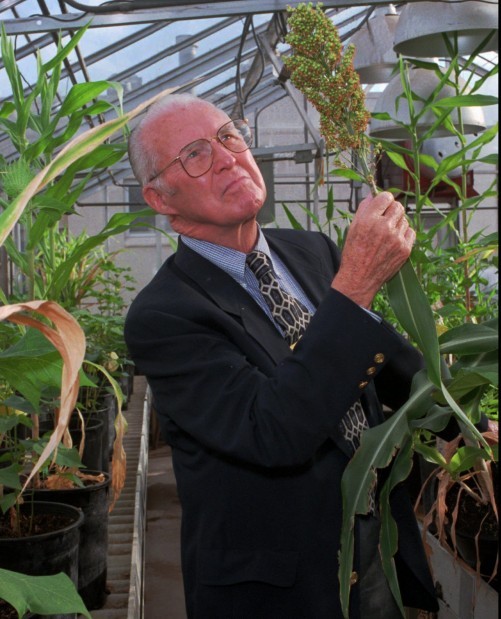
تنها بیماری شناس برنده جایزه نوبل

Norman Borlaug, visiting professor at Texas A&M University, and the 1970 Nobel Prize recipient, looks over some sorghum tests in this Oct. 30, 1996 file photo taken in one of A&M's teaching greenhouses, in College Station, Texas. The Nobel Prize-winning agricultural scientist died at age 95 Saturday Sept. 12, 2009 at his home in Dallas. Known as the father of the "green revolution," Borlaug won the Nobel Peace Prize for his role in combating world hunger. (AP Photo/Bill Meeks,


كمبود بر باعث كاهش دانه‌بندی در خوشه‌های گندم می‌شود

درصورت كمبود بر ريشك سنبله‌هاي گندم از هم بازتر بوده و تحت چنين شرايي دانه‌بندي در خوشه‌هاي گندم كاهش مي‌يابد،
ازميان عناصر ريزمغذي، بر بيشترين اهميت را در فرآيند تشكيل دانه داراست، نبود مقدار كافي بر در خاك سبب عدم تشكيل دانه و يا ريزش دانه و درنتيجه كاهش عملكرد محصول مي‌شود، بر در تشكيل و ترميم بافت‌هاي آوندي، متابوليسم قند و انتقال آن، انتقال كلسيم در گياه و تنظيم نسبت كلسيم به تاسيم در بافت‌هاي گياهي، تنظيم مقدار آب و هدايت آن در سلول‌هاي گياهي نقش دارد.
علائم كمبود بر بسيار متفاوت است و به وضعيت آب و هوايي در مراحل خاصي از رشد گياه بستگي دارد. اولين نشانه مشخص كمبود بر، ترك‌خوردگي برگ‌هاي جوان در نزديك رگبرگ اصلي است. اين علامت با تعدادي دندانه‌هاي غيرطبيعي در حاشيه برگ همراه است كه در طول برگ ايجاد مي‌شوند. بعضي از برگ‌هاي جوان به صورت يك نوار خيلي باريك در طول برگ كلروفيل خود را ازدست مي‌دهند.
افزايش پنجه‌زني، رنگ پريده‌شدن ساقه‌هاي جوان، سوخته و خشك‌شدن برگ‌هاي جوان‌تر، عقيم‌شدن گلها، چروكيدگي و خشك دانه‌ها از ديگر علايم كمبود بر است.
حد بحراني بر در گياه 25 ميلي‌گرم در كيلوگرم است و معمولاً مقادير بالاتر از 200 ميلي‌گرم در كيلوگرم را به عنوان حد سميت درنظر مي‌گيرند. درصورت بروز كمبود، مي‌توان از تركيبات حاوي بر به ويژه اسيد بوريك با 17 درصد بر يا براكس با 11 درصد بر استفاده كرد.
در ميان كودهاي محتوي بر، اسيد بوريك بيشتر از همه مورد استفاده قرار مي‌گيرد. اين كود در خاك به آساني به‌صورت محلول درآمده و جذب گياه مي‌شود. اسيد بوريك را مي‌توان از طريق آب آبياري و يا محلول‌پاشي دراختيار گياه قرار داد.
بهترين روش رفع كمبود اين عنصر، مصرف عمقي در خاك قبل از كاشت است. مصرف خاكي اين كود درصورتي كه قبل از كاشت صورت پذيرد، بسيار مفيدتر از زماني است كه گياه كاشته شده باشد.
مقدار مصرف اسيد بوريك براي گندم 15 تا 25 كيلوگرم در هكتار است. بهترين زمان محلول‌پاشي اسيد بوريك قبل از گلدهي يا رشد و نمو بذرها است. غلظت آن براي محلول‌پاشي گندم 2 تا 5 كيلوگرم در هكتار است.

Herbicides  علفکش ها

Herbicides  علفکش ها

If your problem is a weed, you must remember that effective chemical control requires proper identification of the target plant. You can come to our weed page and identify your unwanted plant there. Effective control also requires accurate timing of applications, proper rate of application and proper uniformity of application. Always follow all label recommendations. Remember that temperature, humidity and rain may affect your application. Please let us know if you would like to see additional information.

In our grading system A is excellent (89% control or higher), B is good (80% - 89% control), C is fair (70% - 79% control), D is poor (less then 70% control). These ae relative ratings and may be affected by environmental conditions, turfgrass vigor or health and the timing of the application. They are intended to be used only as a guide.

========================================================
Pre-emergents / Cool Season

Herbicide: benefin

Trade Name: Balan

Weeds: Crabgrass (A,B), Goosegrass (C), Annual bluegrass (A,B), Common Chickweed (B), Henbit (B), Lawn Burweed (D), Corn Speedwell (A)
---------------------------------------------------------------------------------------------------

Herbicide: benefin+trifluralin

Trade Name: Team

Weeds: Crabgrass (A,), Goosegrass (B), Annual bluegrass (A)
---------------------------------------------------------------------------------------------------

Herbicide: benefin+trifluralin

Trade Name: Team and Team Pro

Weeds: Crabgrass (A), Goosegrass (B), Annual bluegrass (A
---------------------------------------------------------------------------------------------------

Herbicide: bensulide

Trade Name: Betasan, PreSan

Weeds: Crabgrass (A,B), Goosegrass (C), Annual bluegrass (C), Common Chickweed (D), Henbit (D), Lawn Burweed (D), Corn Speedwell (D)
---------------------------------------------------------------------------------------------------

Herbicide: DCPA

Trade Name: Dacthal

Weeds: Crabgrass (A,B), Goosegrass (C), Annual bluegrass (B), Common Chickweed (A), Henbit (C), Lawn Burweed (D), Corn Speedwell (B)
---------------------------------------------------------------------------------------------------

Herbicide: dithiopyr

Trade Name: Dimension

Weeds: Crabgrass (A), Goosegrass (A,B), Annual bluegrass (A,B), Common Chickweed (B)
---------------------------------------------------------------------------------------------------

Herbicide: fenarimol

Trade Name: Rubigan

Weeds: Crabgrass (D), Goosegrass (D), Annual bluegrass (B), Common Chickweed (D), Henbit (D), Lawn Burweed (D), Corn Speedwell (D)
---------------------------------------------------------------------------------------------------

Herbicide: oxadiazon

Trade Name: Ronstar

Weeds: Crabgrass (B), Goosegrass (A), Annual bluegrass (B), Common Chickweed (D), Henbit (D), Lawn Burweed (D), Corn Speedwell (B)
---------------------------------------------------------------------------------------------------

Herbicide: pendimethalin

Trade Name: Pre-M, Pendulum

Weeds: Crabgrass (A), Goosegrass (A,B), Annual bluegrass (A,B), Common Chickweed (A), Corn Speedwell (A)
---------------------------------------------------------------------------------------------------

Herbicide: prodiamine

Trade Name: Barricade

Weeds: Crabgrass (A), Goosegrass (A,B), Annual bluegrass (B), Common Chickweed (B), Henbit (B), Lawn Burweed (B), Corn Speedwell (B)
---------------------------------------------------------------------------------------------------

Herbicide: pronamide

Trade Name: Kerb

Weeds: Crabgrass (C), Goosegrass (D), Annual bluegrass (A,B), Common Chickweed (A), Henbit (D), Lawn Burweed (D), Corn Speedwell (A)

=======================================================

Pre-emergents / Warm-season

Herbicide: atrazine

Trade Name: Aatrex

Weeds: Crabgrass (C), Goosegrass (D), Annual bluegrass (A), Betony (A,B), Chamberbitter (A), Chickweed (C), Clover (A), Common Chickweed (A), Dandelion (A,B), Dock (B), Dollarweed (A), Henbit (A), Lawn Burweed (A), Parsley (A), Plantains (C), Corn Speedwell (A), Spurweed (A,B) Woodsorrel (B)
---------------------------------------------------------------------------------------------------

Herbicide: benefin+oryzalin

Trade Name: XL
---------------------------------------------------------------------------------------------------

Herbicide: metolachlor

Trade Name: Pennant

Weeds: Crabgrass (B), Goosegrass (C)
---------------------------------------------------------------------------------------------------

Herbicide: napropamide

Trade Name: Devrinol

Weeds: Crabgrass (A,B), Goosegrass (B), Annual bluegrass (B), Common Chickweed (A), Henbit (D), Lawn Burweed (A), Corn Speedwell (A)
---------------------------------------------------------------------------------------------------

Herbicide: oryzalin

Trade Name: Surflan

Weeds: Crabgrass (A), Goosegrass (A,B), Annual bluegrass (A), Corn Speedwell (D)
---------------------------------------------------------------------------------------------------

Herbicide: simazine

Trade Name: Princep T&O

Weeds: Crabgrass (C), Goosegrass (D), Annual bluegrass (A), Betony (A,B), Chamberbitter (A), Chickweed (C), Clover (A), Common Chickweed (A), Dandelion (A,B), Dock (B), Dollarweed (A), Henbit (A), Lawn Burweed (A), Parsley (A), Plantains (C), Corn Speedwell (A), Spurweed (A,B) Woodsorrel (B)

========================================================

Broadleaf Pre-emergents

Herbicide: isoxaben

Trade Name: Gallery

Weeds: Crabgrass (C), Goosegrass (D), Annual bluegrass (C), Common Chickweed (A)

========================================================

Post-emergents / Broadleaf

Herbicide: 2,4-D

Trade Name: Many, used in mixtures

Weeds: Betony (B), Black Medic (D), Buttonweed (A,B), Chickweed (C), Clover (B), Daisy (C), Dandelion (A), Dock (B), Dollarweed (A,B), Garlic (A,B), Geranium (A), Henbit (C), Ivy (C), Parsley (D), Pearlwort (A,B), Pepperweed (A), Plantains (A), Shepherd's-purse (A), Corn Speedwell (C), Spurweed (B), Indian mock Strawberry (D), Thistles (A,B), Vetch (B), Violets (C), Woodsorrel (D), Yarrow (B)
---------------------------------------------------------------------------------------------------

Herbicide: MCPP (or Mecoprop)

Trade Name: Many, used in mixtures

Weeds: Betony (B), Black Medic (B), Buttonweed (B), Chickweed (A,B), Clover (A), Daisy (B), Dandelion (A), Dock (C), Dollarweed (A,B), Garlic (D), Geranium (A,B), Henbit (B), Ivy (B), Parsley (A,B), Pearlwort (A,B), Pepperweed (A,B), Plantains (C), Shepherd's-purse (A,B), Corn Speedwell (C), Spurweed (A,B), Indian mock Strawberry (B), Thistles (B), Vetch (C), Violets (C), Woodsorrel (D), Yarrow (C)
---------------------------------------------------------------------------------------------------

Herbicide: MCPA

Trade Name: Many, used in mixtures
---------------------------------------------------------------------------------------------------

Herbicide: 2,4-DP

Trade Name: Many, used in mixtures

Weeds: Betony (B), Black Medic (A), Buttonweed (A,B), Chickweed (A), Clover (A), Daisy (A,B), Dandelion (A), Dock (A), Dollarweed (A,B), Garlic (A,B), Geranium (A), Henbit (A), Ivy (A,B), Parsley (A,B), Pepperweed (A), Plantains (D), Shepherd's-purse (A), Corn Speedwell (C), Spurweed (A), Indian mock Strawberry (A,B), Thistles (A), Vetch (C), Violets (A,B), Woodsorrel (B), Yarrow (A)
---------------------------------------------------------------------------------------------------

Herbicide: bromoxynil

Trade Name: Buctril
---------------------------------------------------------------------------------------------------

Herbicide: clopyralid

Trade Name:

Weeds: Black Medic (A), Chickweed (A), Clover (A), Dock (A), Plantains (A), Spurweed (A), Vetch (C), Violets (A,B), Woodsorrel (A,B)
---------------------------------------------------------------------------------------------------

Herbicide: dicamba

Trade Name: Banvel

Weeds: Betony (A,B), Black Medic (A), Buttonweed (B), Chickweed (A), Clover (A), Daisy (A), Dandelion (A), Dock (B), Dollarweed (A,B), Garlic (A,B), Geranium (A), Henbit (A), Ivy (A,B), Parsley (A,B), Pepperweed (A), Plantains (D), Shepherd's-purse (A), Corn Speedwell (C,D), Spurweed (A), Indian mock Strawberry (A,B), Thistles (A), Vetch (C), Violets (A,B), Woodsorrel (B), Yarrow (A)
---------------------------------------------------------------------------------------------------

Herbicide: triclopyr

Trade Name: Confront

Weeds: Buttonweed (C), Chickweed (A,B), Clover (A), Dandelion (A,B), Dock (B), Dollarweed (A,B), Henbit (A), Ivy (A,B), Parsley (A,B), Pearlwort (A,B), Pepperweed (A), Plantains (A), Shepherd's-purse (A), Corn Speedwell (C), Spurweed (A), Indian mock Strawberry (A,B), Thistles (A), Vetch (C), Violets (C), Woodsorrel (C), Yarrow (A,B)
 

==================================================================

Grass and Sedge Herbicides

Herbicide: MSMA, DSMA

Trade Name: Many
---------------------------------------------------------------------------------------------------

Herbicide: bentazon

Trade Name: Basagran
---------------------------------------------------------------------------------------------------

Herbicide: fenoxaprop-ethyl

Trade Name: Acclaim
---------------------------------------------------------------------------------------------------

Herbicide: halosulfuro

Trade Name: Manage

========================================================

Grass and Sedge Herbicides / Warm-season only

Herbicide:imazaquin

Trade name: Image
---------------------------------------------------------------------------------------------------

Herbicide: metribuzin

Trade name: Sencor
---------------------------------------------------------------------------------------------------

Herbicide: dicloflop

Trade name: Illoxan

سال نو مبارک

سال نو مبارك......mojib

برآمد باد صبح و بوی نوروز

به کام دوستان و بخت پیروز


مبارک بادت این سال و همه سال

همایون بادت این روز و همه روز


چو آتش در درخت افکند گلنار

دگر منقل منه آتش میفروز


چو نرگس چشم بخت از خواب برخاست

حسدگو دشمنان را دیده بردوز


بهاری خرمست ای گل کجایی

که بینی بلبلان را ناله و سوز


جهان بی ما بسی بودست و باشد

برادر جز نکونامی میندوز


سال 1389 مبارك